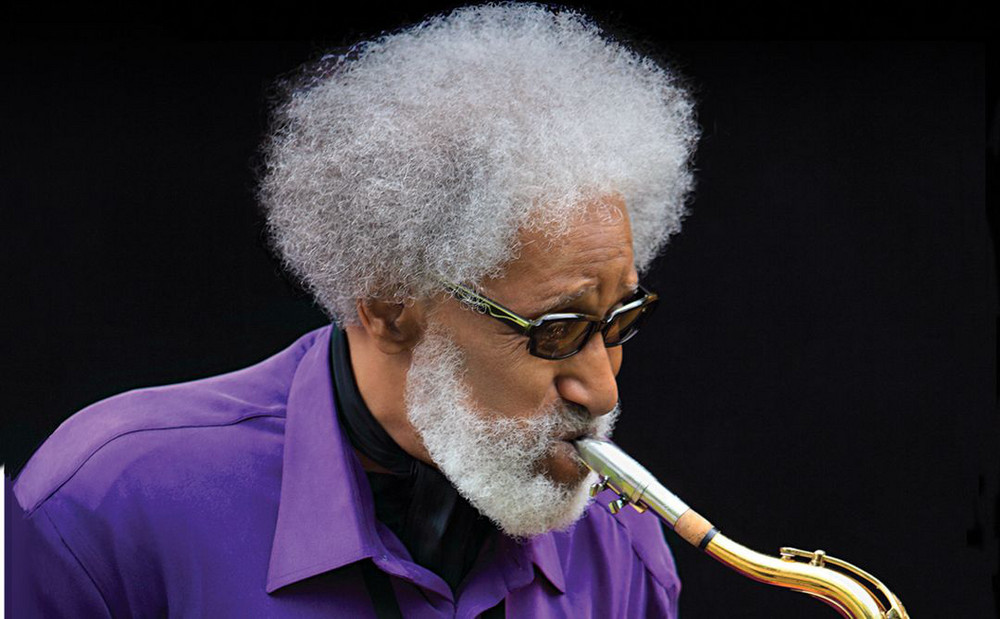
The Saxophone Colossus: bebop's most enduring tenor voice, who turned Williamsburg Bridge practice sessions into jazz legend.
MOODS · contemplative · virtuosic · exploratory · historic · intense
BIOGRAPHY
Sonny Rollins (1930-2026) grew up amid Thelonious Monk, Coleman Hawkins, and Bud Powell, and switched from alto to tenor sax under Hawkins' influence. He began recording with Miles Davis in 1951, writing enduring compositions like 'Oleo,' 'Doxy,' and 'Airegin,' while also working alongside Charlie Parker.
After overcoming addiction in the mid-1950s, Rollins joined the Clifford Brown-Max Roach quintet in 1955, launching a fertile run that included 1956's Saxophone Colossus and 1957's pioneering pianoless trio recordings Way Out West and A Night at the Village Vanguard. He later took extended sabbaticals, including studying at an Indian ashram, before performing from 1971 until retiring in 2012, ultimately recording more than 60 albums as a leader across seven decades.
WHY THEY'RE COOL
From 1956 to 1958, Rollins was widely regarded as jazz's most talented and innovative tenor saxophonist, a reputation cemented by Saxophone Colossus and his groundbreaking pianoless trio albums. His willingness to step away from the spotlight, including famously practicing for hours on the Williamsburg Bridge, only deepened his mystique. Recognition followed accordingly: Down Beat named him both artist and tenor saxophonist of the year in 1997, and his accolades include Grammys, the Austrian Cross of Honor, Sweden's Polar Music Prize, and a National Medal of Arts. Saxophone Colossus itself was preserved by the Library of Congress's National Recording Registry in 2016, cementing his status as one of jazz's greatest improvisers.