Post-punk originators who stripped rock to jagged fragments and never stopped reinventing themselves.
MOODS · angular · austere · experimental · atmospheric · tense · minimalist · cerebral · restless · art-punk · moody · innovative · noisy
BIOGRAPHY
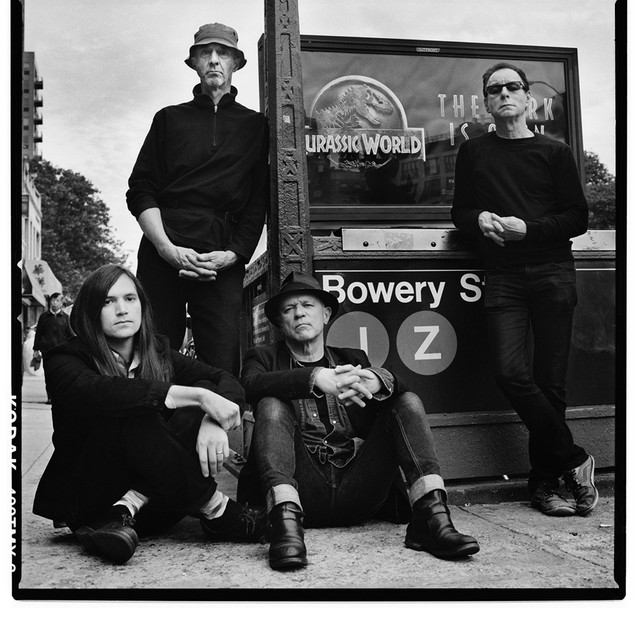
Wire formed in London in October 1976, with Colin Newman, Graham Lewis, Bruce Gilbert and Robert Grey settling into the lineup that defined the band. Rejecting punk's fast, three-chord template, they pared songs down to blunt, angular fragments, an approach that shaped their landmark 1977 debut Pink Flag and helped seed the emerging post-punk scene, including an appearance on the Roxy London WC2 compilation.
Their sound then grew more atmospheric and layered, adding guitar effects and synthesizers on Chairs Missing (1978) and 154 (1979). Money troubles and creative friction split the group in 1979, producing the live document Document and Eyewitness (1981). They returned in 1985 as an electronics-leaning "beat combo," later releasing The Ideal Copy (1987) and the noisier Send (2003). Newman, Lewis, Grey and Matthew Simms have continued making new material since.
WHY THEY'RE COOL
Wire's influence has far outrun their commercial footprint. Big Black, Minutemen and Sonic Youth cited them admiringly in the 1980s and 90s, and later artists from Soundgarden and Hüsker Dü to Manic Street Preachers, Quicksand, Mission of Burma, Mary Timony and A Certain Ratio have named them as a touchstone. Robert Pollard went so far as to call their 1979 album 154 "the greatest album of all time," noting Wire's fingerprints throughout his own work. What keeps the band vital is their refusal to repeat themselves, willingly pausing rather than record without fresh ideas, a discipline that has powered decades of self-reinvention.
GEORGE'S PLAYS
First time on the station.
PLAYED ON WOKE1