PLAYED ON WOKE-1
2 plays- Revolution Blues2 PLAYS
MOST PLAYED · 2 PLAYS
Neil Young
Revolution Blues
Neil Young
Neil Young's 1974 track 'Revolution Blues,' inspired by the Manson murders, stands as one of rock's creepiest songs, so unsettling his own CSNY bandmates refused to play it live.
MOODS · eerie · haunting · unsettling · dark · raw · distorted · restless · folk-rock · electric · gritty · confessional · countercultural
Neil Percival Young (born November 12, 1945, in Winnipeg) moved to Los Angeles in 1966 to form Buffalo Springfield, then launched his solo career with Crazy Horse in 1969. He also joined Crosby, Stills, Nash & Young for the chart-topping 1970 album Déjà Vu. His solo catalog includes Everybody Knows This Is Nowhere (1969), After the Gold Rush (1970), Harvest (1972), On the Beach (1974), and Rust Never Sleeps (1979). Young's distorted guitar work with Crazy Horse earned him the nickname 'Godfather of Grunge,' leading to 1995's Mirror Ball with Pearl Jam. He has been inducted into the Rock and Roll Hall of Fame twice, founded Farm Aid in 1985 with Willie Nelson and John Mellencamp, and was made an Officer of the Order of Canada in 2010.
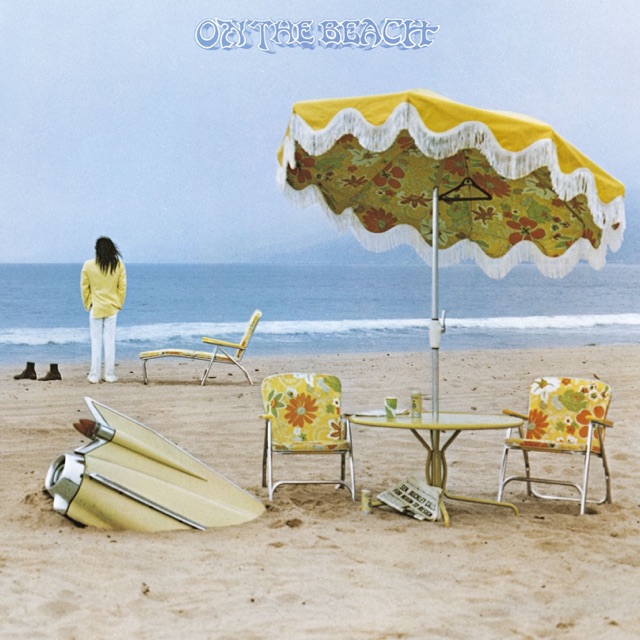
On the Beach's 'Revolution Blues' finds Young at his creepiest, inspired by the Manson murders and so unsettling that his Crosby, Stills, Nash & Young bandmates refused to perform it live. Paired with the distorted, Crazy Horse-fueled guitar sound that later earned him the nickname 'Godfather of Grunge,' it captures a restless, dark edge running through his decades-spanning catalog of folk-rock and electric rock albums.