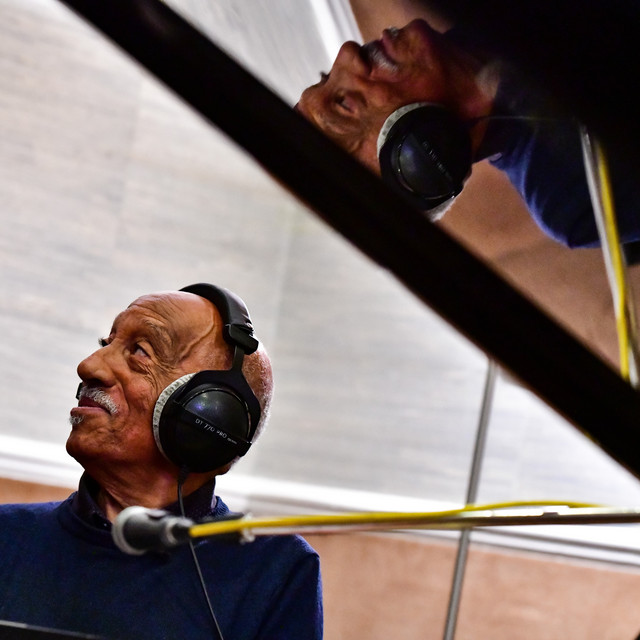
The father of Ethio-jazz, who fused vibraphone and conga with Ethiopian scales to invent a genre that later fueled Broken Flowers and hip-hop samples.
MOODS · contemplative · groove-driven · cross-cultural · cinematic · jazzy · hypnotic · meditative · rhythmic · vintage · sophisticated
BIOGRAPHY
Mulatu Astatke, born in Jimma, Ethiopia in 1943, trained in Wales, at Trinity College of Music in London, and at Berklee College of Music in Boston, becoming the first African student enrolled there. Blending jazz and Latin influences with traditional Ethiopian music, he introduced vibraphone and conga into Ethiopian popular music, pioneering what became known as Ethio-jazz.
His key recordings include Mulatu of Ethiopia (1972, New York) and Yekatit Ethio Jazz (1974), released through Amha Eshete's Amha Records in Addis Ababa, a hub for Ethiopia's pop and jazz golden age from 1968 to 1974. He later collaborated with the Either/Orchestra and London's The Heliocentrics, and in 2025 released Mulatu Plays Mulatu, incorporating traditional instruments like the krar and masenqo.
WHY THEY'RE COOL
Mulatu Astatke didn't just play jazz, he engineered an entirely new hybrid: Ethio-jazz, built from Ethiopian modal scales, American jazz and funk, and Latin rhythm, voiced through vibraphone and conga he brought into Ethiopian music for the first time. His 1970s recordings for Amha Records helped define a golden era of Ethiopian pop, and decades later his sound found new life when Jim Jarmusch's Broken Flowers introduced it to Western audiences, followed by samples from Nas, Madlib, Kanye West, and Quantic. Still creating in 2025 with Mulatu Plays Mulatu, he remains a rare case of a genre founder still expanding the music he invented.
GEORGE'S PLAYS
George has played this artist 4 times.
PLAYED ON WOKE1